Product Type : Music
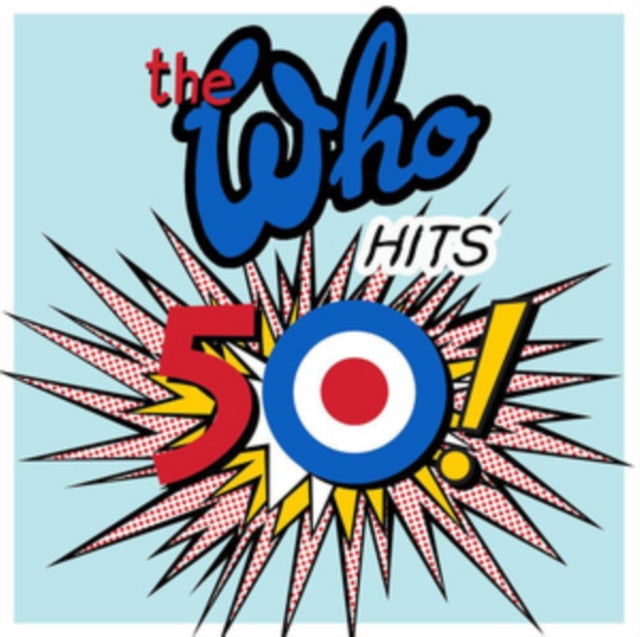
Who - The Who Hits 50 (Vinyl)
Who - The Who Hits 50 (Vinyl)
Artist: Who
Music Genre: Rock & roll, Rock
- Label
- Polydor
- Cat No
- 3794051
- Released
- 2014
- Pressing
- Europe
- Styles
- Rock & Roll, Arena Rock, Classic Rock, Mod, Pop Rock
 All items are imported on demand. Delivery to us normally takes 10 - 15 Working Days. Total delivery to your door in SA is 12 - 20 Working Days. Get it between &
Other formats & editions
Shipping Costs From R69 per order. Returns & Refunds Policy information click here
Couldn't load pickup availability
Details
| Artist | Who |
|---|---|
| Format | Vinyl |
| Label | Polydor |
| Catalogue no. | 3794051 |
| Genre | Rock & roll and Rock |
| Barcode | 0602537940516 |
The Who — The Who Hits 50!
Format: Vinyl • Label: Polydor (3794051) • Released: 2014 • Pressing: Europe • Genre: Rock & Roll, Arena Rock, Classic Rock, Mod, Pop Rock
Tracklist:
A1. Zoot Suit
A2. I Can't Explain
A3. Anyway, Anyhow, Anywhere
A4. My Generation
A5. Substitute
A6. I'm A Boy
B1. Happy Jack
B2. Pictures Of Lily
B3. I Can See For Miles
B4. Magic Bus
B5. Pinball Wizard
C1. The Seeker
C2. Won't Get Fooled Again (Single Edit)
C3. Baba O'Riley
C4. Bargain
C5. Join Together
D1. 5:15
D2. Squeeze Box
D3. Who Are You
D4. Real Good-Looking Boy
D5. Be Lucky
Imported from the UK.
About the artist
About the artist
They are considered to be one of the most influential rock bands of all time, and have sold an estimated 100 million records worldwide. They set the Guinness world record on May 31, 1976, for loudest concert, at 126 decibels. Inducted into Rock & Roll Hall Of Fame in 1990 (Performer).
Known for their involvement in the 1960s British mod movement, the smashing of their instruments, their development of the rock opera genre, and as innovators in rock music performance and instrumentation, including the integration of synthesizers, the development of the "Marshall Stack" amplifier design, and advancements in concert sound reinforcement (PA) and visual presentation (stage lighting and lasers).
History
Originally called The Detours, which was formed March 1959 by Roger Daltrey (from his 1958 skiffle band The Sulgrave Rebels), later joined by John Entwistle in September 1961, who then recruited Pete Townshend (the two were school friends and former bandmates in trad jazz band The Confederates and rock group The Scorpions) in February 1962. In February 1964, they changed their name due to similarly named Johnny Devlin and the Detours from Liverpool. Pete Townshend's flatmate Richard Barnes came up with the name "The Who," and Helmut Gorden became their manager/promoter. In April 1964, Keith Moon replaced previous drummers Doug Sandom and Dave Golding, and publicist Peter Meaden became the manager and renamed the band as "The High Numbers" to join the Mod movement. They released "Zoot Suit / I'm The Face" on Fontana, but it failed to chart, and Meaden was replaced by Kit Lambert and Chris Stamp as managers. In November 1964, the name was changed back to "The Who," and the group started a residency at London's Marquee Club, under the theme of "Maximum R&B," which solidified their following. Released their first single as The Who, "I Can't Explain" on Brunswick on January 15, 1965, produced by Shel Talmy, and their first LP, "My Generation" in December 1965. In 1966, they split with Talmy, who successfully sued the group, and signed with Polydor, on the Reaction label. Their second album titled "A Quick One" (re-titled "Happy Jack" in the U.S., released on Decca) featured their first "mini-opera." The single "Happy Jack" resulted in their first U.S. chart success in 1967, at which point they first toured the U.S., and in June, played the Monterey International Pop Festival. Their third album, "The Who Sell Out," was a concept album in tribute to England's pirate radio stations, released on Lambert and Stamp's newly formed Track Record label, and achieved a top 10 hit with "I Can See For Miles." In 1969, they released a full rock opera, "Tommy," and achieved mainstream success, performing at the Woodstock festival. Their next album, "Who's Next," in 1971, was culled from an aborted rock opera called "Lifehouse," and produced by Glyn Johns instead of Lambert and Stamp.
Source: Discogs